Pneumatic atomizers mix compressed air (or other gases) with the liquid to be sprayed, producing a fine spray. Depending on the pressures and the liquid used, the diameter of the droplets may vary. The pressure; used with pneumatic atomizers is relatively low and rarely higher than 3 bar.
The spray combination of the pneumatic atomizer consists of a configuration; It consists of a liquid nozzle and an air nozzle that determine the different flow rates, the type of mixture (internal and external), and the shape of the jet.
The air automizing nozzles can be:
• Air automizing nozzles type E
• Automatic spray type P
Internal mixing
With internal mixing, the spray liquid is mixed inside the air nozzle to produce a perfect spray. The working pressures of the air and liquid are closely related and significantly affect the spray pattern.
Many spray options are possible for the flow rates and shape types that are possible:
- Full cone
- Hollow cone
- Flat spray
The supply can take place by pressure, by fall, or with the Venturi effect.
Outside mixing
With the external mixture, air and liquid mix outside the air nozzle. In this case, air and liquid pressures; are not related.
This nozzle type is particularly suitable for applications with high-viscosity and density liquids or with the presence of small solid particles.
The available spray types are:
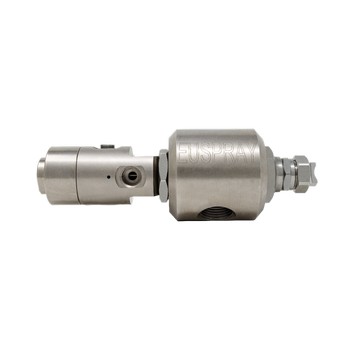
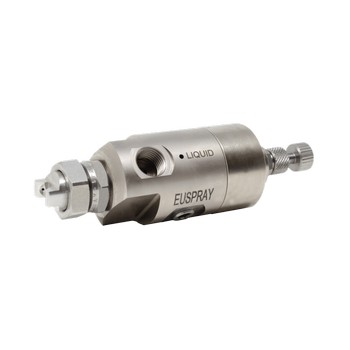
Within the family of pneumatic atomizers, the Euspray range offers different models to meet all misting needs in any application.